

Introduction
Starting a workout routine is exciting, but it can also be confusing. Social media is full of conflicting advice, and many beginners believe they need to train harder, eat less, or spend hours in the gym to see results. In reality, beginner workout mistakes often slow progress more than a lack of effort.
The good news is that most of these mistakes are easy to fix once you know what to look for. Whether your goal is weight loss, building muscle, improving fitness, or simply creating healthier habits, avoiding these common pitfalls will help you make steady progress while reducing the risk of injury and burnout.
Quick Answer
The most common beginner workout mistakes include skipping warm-ups, using poor exercise form, training too much, ignoring recovery, and expecting results too quickly. Focus on proper technique, consistent training, balanced nutrition, and realistic expectations for long-term success.
Why Beginner Workout Mistakes Matter
When you’re new to fitness, your body is adapting to something it hasn’t done consistently before. Muscles, joints, tendons, and even your cardiovascular system all need time to adjust.
Many beginners assume more effort automatically leads to better results. That’s rarely true.
Progress comes from the right balance of training, recovery, nutrition, and consistency. Missing one of these pieces can leave you feeling sore, frustrated, or stuck despite working hard.
One thing most people underestimate is that simple habits usually outperform complicated workout plans.
How Your Body Improves Through Training
Exercise creates a challenge for your body. Recovery allows your muscles and nervous system to adapt to that challenge.
This process explains why rest days are just as important as workout days.
If you constantly push yourself without enough sleep, proper nutrition, or recovery time, your performance can decline instead of improving.
For beginners, the goal isn’t to train until you’re exhausted. It’s to train consistently enough that your body becomes stronger week after week.
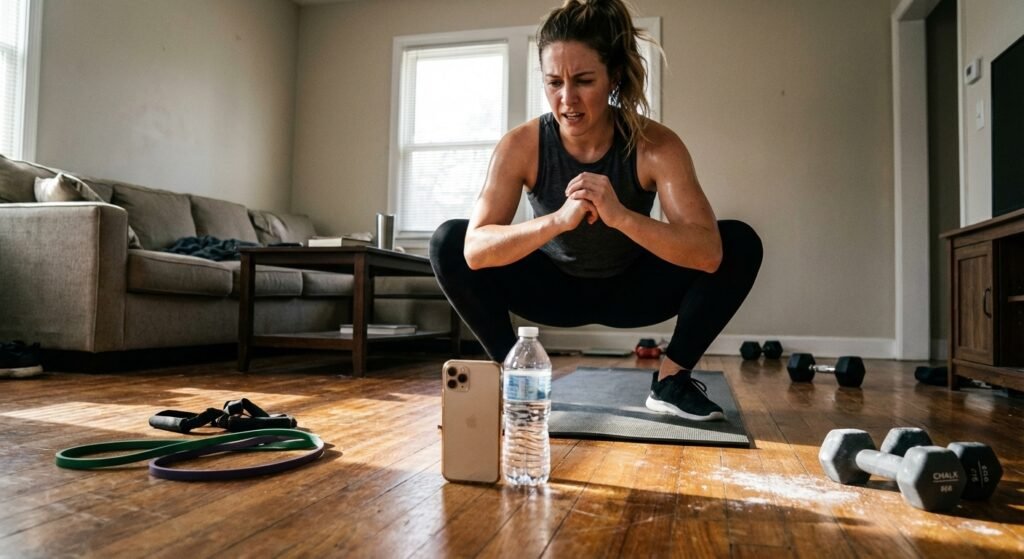
10 Common Beginner Workout Mistakes and How to Avoid Them
1. Trying to Do Too Much Too Soon
Many beginners start with six or seven workouts a week because they’re highly motivated.
The problem is that motivation fades faster than good habits develop.
Instead, begin with three full-body workouts each week. Add more training only after your body adapts and recovery feels manageable.
Consistency beats intensity in the early stages.
2. Skipping the Warm-Up
Jumping straight into heavy exercises increases the risk of strains and poor movement.
A good warm-up only takes five to ten minutes and should include:
- Light cardio
- Dynamic stretches
- Mobility exercises
- A few lighter sets of your first exercise
This prepares your muscles and joints for harder work.
3. Using Poor Exercise Form
Good technique helps you train the intended muscles while reducing unnecessary stress on your joints.
A common mistake beginners make is lifting more weight than they can control.
Start with lighter weights and focus on smooth, controlled movements. Once your form is consistent, gradually increase resistance.
If you’re unsure about your technique, ask a qualified trainer for guidance or record yourself to compare your form with reliable instructional resources.
4. Ignoring Recovery
Muscles don’t grow during workouts. They grow while recovering.
Recovery includes:
- Sleeping 7 to 9 hours
- Eating enough protein
- Staying hydrated
- Taking rest days
- Managing stress
If you’ve been following your routine for several weeks but feel constantly tired or weaker than before, inadequate recovery may be the reason.
Also Read How to Start Your Fitness Journey Without Feeling Overwhelmed
5. Changing Workout Programs Every Week
It’s tempting to switch routines after seeing a new workout online.
Unfortunately, constantly changing exercises makes it difficult to measure progress.
Stick with a beginner program for at least six to eight weeks before making significant changes.
Progressive overload, which means gradually increasing the challenge over time, works best when your routine remains consistent.
6. Focusing Only on Cardio or Only on Weights
Some beginners think cardio is the only way to lose weight, while others believe lifting weights is all they need.
The best approach usually combines both.
Strength training helps preserve or build muscle, while cardio supports heart health, endurance, and calorie expenditure.
A balanced routine provides better long-term results than relying on just one type of exercise.
7. Expecting Immediate Results
Visible changes take time.
While some people notice better energy and improved mood within the first few weeks, meaningful changes in strength, muscle, or body composition usually require months of consistent effort.
Factors like age, sleep quality, nutrition, genetics, training history, and stress all influence how quickly results appear.
Patience isn’t exciting, but it’s essential.
8. Neglecting Nutrition
You can’t out-train poor eating habits.
That doesn’t mean your diet has to be perfect.
Focus on simple improvements:
- Eat enough protein to support muscle recovery.
- Include vegetables and fruit daily.
- Choose mostly whole foods.
- Drink enough water.
- Avoid relying heavily on processed snacks and sugary drinks.
Small improvements that you maintain are more effective than extreme diets you abandon after two weeks.
9. Comparing Yourself to Others
Fitness is highly individual.
Someone who has trained for five years shouldn’t become your benchmark if you’re on week three.
Compare yourself with where you started instead.
Can you perform more push-ups?
Can you walk farther?
Can you lift slightly heavier weights?
Those are meaningful signs of progress.
10. Ignoring Pain Signals
There’s an important difference between muscle soreness and pain.
Mild soreness after training is normal, especially when starting.
Sharp pain, joint pain, swelling, numbness, or dizziness during exercise should never be ignored.
Stop the exercise and seek advice from a healthcare professional if symptoms persist.
Proper form matters most during compound exercises like squats, deadlifts, and overhead presses because poor technique under heavier loads increases injury risk.
Simple Starting Checklist
If you’re beginning your fitness journey, keep this checklist in mind:
- Train three times per week.
- Warm up before every workout.
- Learn proper exercise technique.
- Sleep at least seven hours most nights.
- Eat enough protein and stay hydrated.
- Track your workouts.
- Increase weight or repetitions gradually.
- Be patient with your progress.
This sounds simple, but it makes a real difference over time.
Who This Advice Is Best For
This guide is ideal for:
- Gym beginners
- People starting a home workout routine
- Anyone returning to exercise after a long break
- Students and busy professionals
- Beginners focused on weight loss or muscle gain
If you have heart disease, uncontrolled high blood pressure, recent surgery, severe joint pain, or another medical condition, consult your doctor before beginning a new exercise program.
If an exercise consistently causes pain despite good form, modify it or seek guidance from a qualified fitness professional or physiotherapist.
Realistic Expectations
Fitness is built through repetition, not perfection.
Most beginners notice improvements in energy, confidence, and workout performance within the first month.
Visible body changes usually take longer and depend on training consistency, nutrition, sleep, genetics, and overall lifestyle.
Missing one workout won’t ruin your progress. Repeatedly giving up because results aren’t immediate often does.
Aim to improve slightly each week instead of chasing dramatic transformations.
Frequently Asked Questions
How many days should a beginner work out?
Three to four workouts per week is enough for most beginners to build strength and improve fitness while allowing adequate recovery.
Is muscle soreness a sign of a good workout?
Not necessarily. Soreness can happen after a new workout, but it’s not required for progress. Consistent strength gains and better performance are more reliable indicators.
Should beginners lift heavy weights?
Begin with weights you can control using proper form. Increase resistance gradually as your technique improves.
How long should beginner workouts last?
Most effective beginner workouts last between 30 and 60 minutes, depending on your goals and fitness level.
What’s the biggest mistake beginners make?
Trying to do too much too quickly is one of the most common beginner workout mistakes. Building sustainable habits almost always produces better long-term results.
Final Thoughts
Everyone starts somewhere, and mistakes are part of learning. The key is recognizing habits that hold you back before they become routine.
By avoiding these beginner workout mistakes, focusing on proper technique, recovering well, eating balanced meals, and staying consistent, you’ll build a stronger foundation for long-term fitness. Progress may feel slow at times, but steady improvement is far more valuable than quick bursts of motivation that don’t last.
